Different Winter Plants For Your Garden
The winter garden has a reputation for bleakness that it does not entirely deserve. While it is true that the explosion of growth and colour that characterises spring and summer gives way to a quieter, more restrained seasonal palette, a garden that has been thoughtfully planted for winter interest can be genuinely beautiful — layered with evergreen structure, jewelled with unexpected bursts of flower colour, fragrant with the extraordinary perfume of winter-blooming shrubs, and alive with the birds and beneficial insects that shelter in and feed from well-chosen winter plants. The key to transforming a potentially drab winter garden into one that rewards a walk outside on even the coldest morning is understanding which plants genuinely thrive in winter conditions, what each contributes to the overall visual and sensory experience of the garden, and how to combine them in ways that create interest across every dimension — not just flower colour, but foliage texture, structural form, berry display, and fragrance. This guide introduces the best and most reliably rewarding winter plants for UK and temperate climate gardens, covering everything from classic hardy bedding plants and structural evergreen shrubs to the bulbs whose emergence signals the first tentative steps toward spring and the ornamental grasses whose movement and texture give winter gardens their most distinctive character.
Winter Bedding Plants: Reliable Colour From the First Frost to Early Spring
For gardeners who want the most immediate and most reliably colourful impact in a winter garden with minimum complexity, the range of cold-tolerant bedding plants available from autumn onwards provides an excellent foundation for container displays, window boxes, and border edging whose cheerful presence defies the grey skies and shortened days of the season. These plants are bred specifically for cold tolerance and winter performance, and their ability to maintain both foliage interest and flower production through temperatures that would devastate summer bedding makes them among the most practical and most widely used winter garden solutions available to home gardeners of every experience level.
Winter pansies are the undisputed champions of the winter bedding category — tough, cheerful, and available in a colour range of extraordinary breadth that spans pure white, rich purple, deep burgundy, bright yellow, vivid orange, and bicoloured combinations that create immediate visual impact in even the most modest container or border planting. Unlike summer pansies, which struggle in cold conditions, winter varieties have been specifically selected for cold hardiness and will continue producing flowers throughout autumn and winter, pausing briefly during the coldest spells before resuming their display as temperatures rise in late winter and early spring. They perform best when deadheaded regularly — removing spent flowers as soon as they fade encourages the production of fresh blooms and prevents the plant’s energy from being directed toward seed production rather than continued flowering. For maximum winter impact, mass planting of a single colour or a deliberately chosen two-colour combination in large containers or generous border drifts consistently produces more visually striking results than the scattering of mixed colours whose busy appearance can feel cluttered rather than cheerful in winter’s more subdued light.
Cyclamen — the hardy outdoor varieties rather than the tender houseplant forms — are among the most elegant and most surprisingly tough of all winter bedding options, producing nodding, swept-back flowers in shades from white through pale pink to deep magenta above beautifully patterned silvery-green foliage whose marbled appearance provides visual interest even when the plant is not in flower. Hardy cyclamen tolerate remarkably cold conditions and will naturalise in sheltered spots under deciduous trees and shrubs where their autumn and winter flowering fills the gap left by summer bulbs and perennials that have died back. Ornamental cabbages and kales — grown for the extraordinary structural beauty of their tightly packed leaf rosettes in combinations of purple, white, and green — complete the winter bedding picture, providing bold textural contrast to the softer forms of pansies and cyclamen and performing reliably in containers and borders from autumn through to late winter when they begin to bolt and are replaced by spring planting.
Winter-Flowering Shrubs: The Fragrant Heart of the Winter Garden
If winter bedding plants provide the reliable colour and the accessible impact of the winter garden, winter-flowering shrubs provide its soul — the unexpected, often intensely fragrant displays that make a midwinter garden visit a genuine sensory experience rather than simply a duty walk around a dormant space. Several of the most powerfully scented plants in the entire garden repertoire choose winter as their flowering season, an evolutionary strategy that maximises their attractiveness to the small number of pollinating insects active in cold conditions by offering a scent reward of extraordinary concentration whose impact on a still, cold winter morning can stop a person in their tracks from several metres away.
Winter-flowering honeysuckle — a vigorous, semi-evergreen shrub rather than the climbing species most commonly associated with the honeysuckle name — produces small, creamy white flowers from midwinter through to early spring whose perfume is astonishingly intense for their modest size, carrying on cold air to a remarkable distance and making the shrub one of the most valuable fragrance investments available to any winter garden. It grows vigorously and tolerates a wide range of conditions, making it a genuinely easy-care winter garden asset that repays the space it occupies with one of the most reliably pleasing winter experiences any garden can offer. Witch hazel — with its extraordinary spider-like flowers of yellow, orange, or red produced directly on bare stems in the depths of winter — is one of the most visually striking and most seasonally unique of all winter-flowering shrubs, combining architectural flower form with a sweet, slightly spicy fragrance and the seasonal rarity of genuine winter colour on a plant whose scale and permanence make it a long-term garden investment rather than a temporary seasonal filler.
Mahonia — the bold, architectural evergreen shrub whose large pinnate leaves give it a distinctly exotic appearance — produces racemes of small yellow flowers from autumn through to late winter whose honey scent is valuable for any winter-active bees and whose display provides a warm, sunny colour note in the border during the coldest months. Its tolerance of shade makes it one of the most versatile structural plants available for difficult positions under trees or against north-facing walls where few other winter-interest plants perform reliably. Daphne — in its various winter-flowering forms — offers some of the most intensely sweet fragrances in the entire plant world, concentrated into small clusters of pink or white flowers produced on compact, slow-growing shrubs whose modest size makes them suitable for the smallest gardens and even for large containers positioned near a doorway or seating area where their extraordinary scent can be appreciated at close range.
Evergreen Structure Plants: The Backbone That Holds the Winter Garden Together
Structure is the quality that most distinguishes a well-designed winter garden from a merely well-planted one, and the evergreen plants that maintain their form, foliage, and visual presence throughout the coldest months are the backbone around which all other winter garden interest is most effectively organised. Without evergreen structure, even a generously planted winter garden risks looking simply bare and unfinished during the months when deciduous trees, perennials, and summer shrubs have shed their leaves and retreated to dormancy, leaving a collection of interesting individual plants floating in a visual void without the connecting framework that makes a garden feel intentional and resolved.
Box — the classic formal hedging and topiary plant — has been the dominant structural evergreen of temperate gardens for centuries, and while box blight and box caterpillar have created significant management challenges for existing plantings, alternative structural evergreens including ilex crenata, pittosporum, and Euonymus japonicus provide comparable structural qualities with greater disease resilience. Clipped balls, cones, and hedges of these structural evergreens provide the geometric anchor points around which the more exuberant flowering and fruiting plants of the winter garden are arranged, their clean forms contrasting effectively with the looser habits of winter-flowering shrubs, ornamental grasses, and bulbs whose naturalised informality benefits from structural counterpoint.
Hellebores — whose common name of Lenten rose understates their genuine garden value — produce large, nodding flowers in colours ranging from pure white and soft pink through to deep plum, almost black, and complex spotted and veined patterns, from midwinter through to spring. As near-evergreen perennials whose bold, divided foliage provides ground-level structure throughout the year, hellebores are among the most versatile and most reliable winter garden plants available, performing well in the dappled shade conditions under deciduous trees that can be the most challenging positions in any home and garden design to plant effectively. Their long-lived, low-maintenance nature and the increasing range of named varieties available from specialist nurseries make them one of the most rewarding long-term investments in winter garden planting, combining structural foliage interest throughout the year with the genuine excitement of their winter flowering season.
Winter Bulbs: The Promise of Spring in the Depths of Winter
The winter-flowering bulbs occupy a uniquely emotional position in the seasonal garden calendar — their emergence from bare or frost-covered soil represents something more than botanical interest, carrying the psychological weight of seasonal renewal and the promise of spring in a way that no other garden plant quite replicates. Snowdrops, winter aconites, early crocuses, and the early dwarf irises are among the most eagerly anticipated plants in the entire gardening year, their appearance during the darkest weeks of winter providing a genuine lift to the spirits that is difficult to fully account for in purely aesthetic terms but that any gardener who has spotted the first snowdrop of the year emerging from apparently lifeless ground will recognise immediately and completely.
Snowdrops — universally beloved, deceptively tough, and carrying a cultural significance in British gardening that extends well beyond their modest scale — are the definitive winter bulb and one of the most consistently rewarding plants any garden can contain. Their preference for being planted or divided and transplanted while still in growth — immediately after flowering, in what is known as the green stage — rather than as dry bulbs in autumn makes them somewhat more demanding to establish than other bulbs, but once naturalised in a suitable position they spread steadily and reliably to produce the expanding drifts whose display in late January and February is one of the most celebrated events in the British gardening calendar. Winter aconites — small, buttercup-yellow flowers surrounded by a ruff of bright green leaves — emerge even earlier than snowdrops and combine beautifully with them in naturalised plantings under deciduous trees where the early spring light reaches the ground before the leaf canopy closes overhead.
Early dwarf irises in vivid shades of purple, blue, and white provide some of the most intense and most jewel-like colour available in the winter and very early spring garden, their flowers startlingly vivid against bare soil and frost in the exposed, sunny positions they prefer. Planted in generous groups — ideally in south or west-facing borders where the warmth of winter sunshine encourages their earliest possible emergence — they produce their display before most other flowering plants have stirred from dormancy, making their brief but brilliant flowering season one of the most memorable episodes in the winter gardening year. For any gardener who wants their outdoor space to deliver genuine pleasure and genuine visual interest during the months when the garden is most at risk of being ignored entirely, a generous investment in winter bulbs — planted in drifts under trees, naturalised in lawns, or grouped in containers whose arrangement brings them close to the house where they can be seen from inside — represents one of the most cost-effective and most emotionally rewarding seasonal plantings available at any price point.
Ornamental Grasses and Seedheads: Texture, Movement, and Wildlife Value in Winter
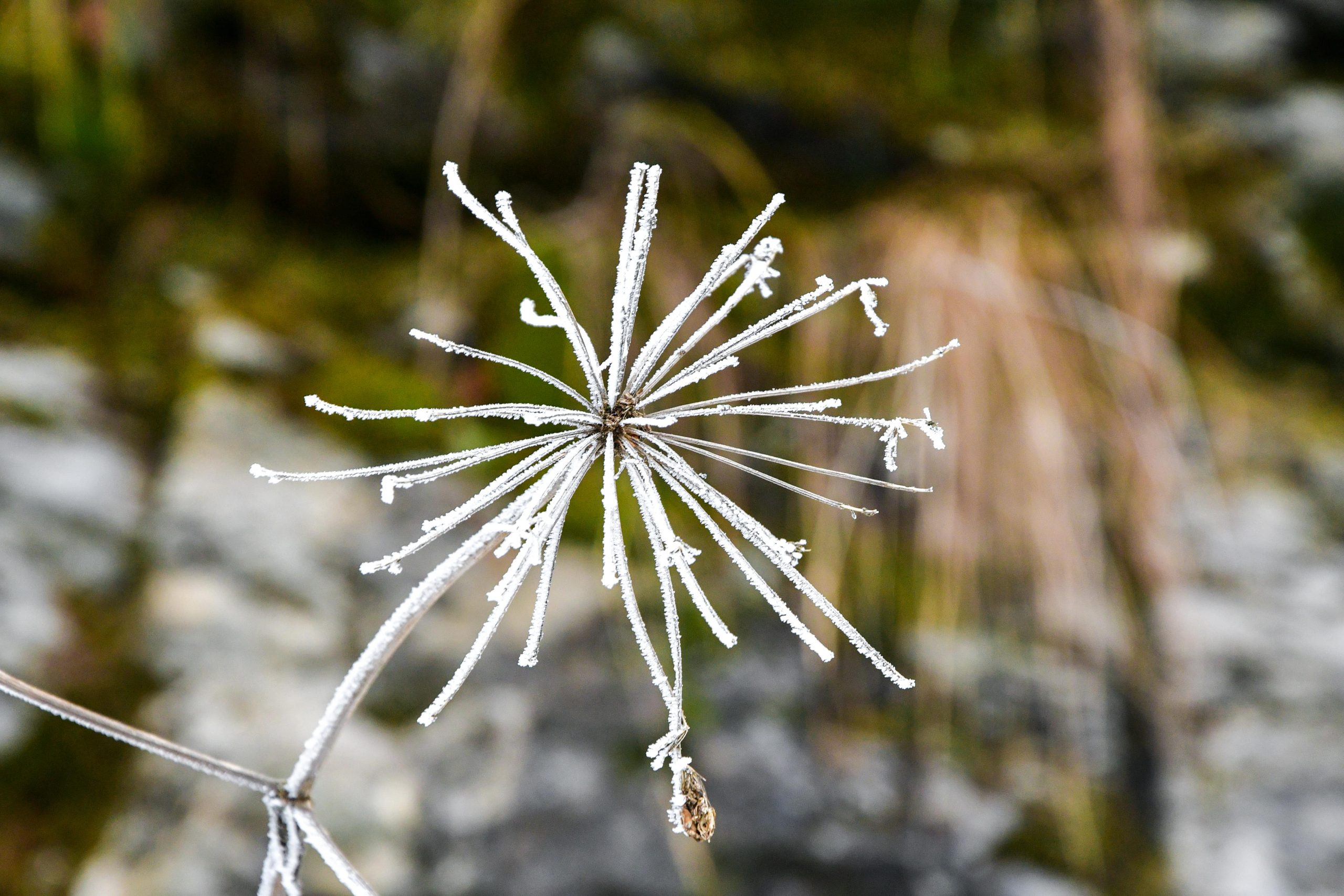
The ornamental grasses and the dried seedheads of late-flowering perennials contribute to the winter garden something that no other plant category quite provides — movement, texture, and the particular quality of light that catches in translucent seed cases and frosted stems to create effects of extraordinary ephemeral beauty. A garden that includes generous plantings of ornamental grasses and that resists the autumn temptation to cut back every perennial to the ground in an act of premature tidiness will discover a winter garden of remarkable richness — one that shifts and whispers in the wind, collects and displays frost and morning dew in magical temporary displays, and provides shelter and food for birds and beneficial insects whose presence adds a further dimension of life and interest to the cold-season garden.
Miscanthus — the large, imposing ornamental grass whose feathery plumes catch the winter light with particular effectiveness — provides some of the most dramatic structural presence available in a winter border, its tall stems and elegant seed plumes remaining attractive from the time they develop in late summer through to the end of winter when the new season’s growth signals the appropriate moment to cut them back to the ground. The smaller Pennisetum grasses whose bottle-brush seedheads are equally attractive and whose more compact habit makes them suitable for smaller borders and large containers add a softer, more intimate dimension to ornamental grass plantings that balances the bolder impact of the larger species. Stipa gigantea — the golden oats grass whose transparent golden seed heads catch the light with an effect that has been described as solidified sunshine — provides year-round structural presence with the particular winter quality of catching low winter sunlight at angles that make its contribution to the garden most luminous precisely when the light is most limited and most precious.
The seedheads of herbaceous perennials whose deliberate retention through winter contributes both aesthetic and ecological value include the architectural seed cases of alliums, the fluffy seedheads of clematis, the structural pods of iris, and the flat-topped seed clusters of sedums whose dried flowers provide both winter visual interest and valuable seed food for finches and other seed-eating birds. The decision to leave these structures in place rather than cutting them back in the autumn tidy-up is one of the most impactful single choices a gardener can make for winter garden interest — transforming what would otherwise be bare stems and empty ground into a gallery of natural sculpture whose changing appearance through frost, rain, and winter light makes the winter garden genuinely rewarding to observe throughout the season rather than simply something to be endured until spring finally arrives.
Conclusion
A winter garden that has been thoughtfully planted with a mix of structural evergreens, fragrant winter-flowering shrubs, hardy bedding plants, the promise of early bulbs, and the movement of ornamental grasses is not a compromise version of a garden enduring an inhospitable season — it is a garden expressing a different but equally valid and equally beautiful set of seasonal qualities. The home and garden through winter has the capacity to deliver experiences that are genuinely unique to this season — the extraordinary scent of witch hazel on a still, frosty morning, the first snowdrop emerging from apparently frozen ground, the frost-silvered seedheads catching the low angle of a January sunrise, and the brilliant flash of winter pansy colour against bare soil — experiences that no other season produces in the same form and that reward the gardener who has invested in planning and planting for winter with a depth of seasonal pleasure that extends the garden’s value and relevance across the full twelve months of the year. The investment in winter planting is modest in both cost and effort compared to its returns, and the garden it creates is one whose interest, beauty, and the care it communicates for outdoor living in every season make it one of the most rewarding aspects of any home’s outdoor space.